Driving after dark demands more from your eyes than most people realise. Even those who see perfectly in daylight can find themselves squinting at distant headlights, struggling to read signboards, or misjudging the edges of an unlit road. For many, the culprit is a little-known optical phenomenon called night myopia — and understanding it could quite literally be a matter of life and death.
What Is Night Myopia?
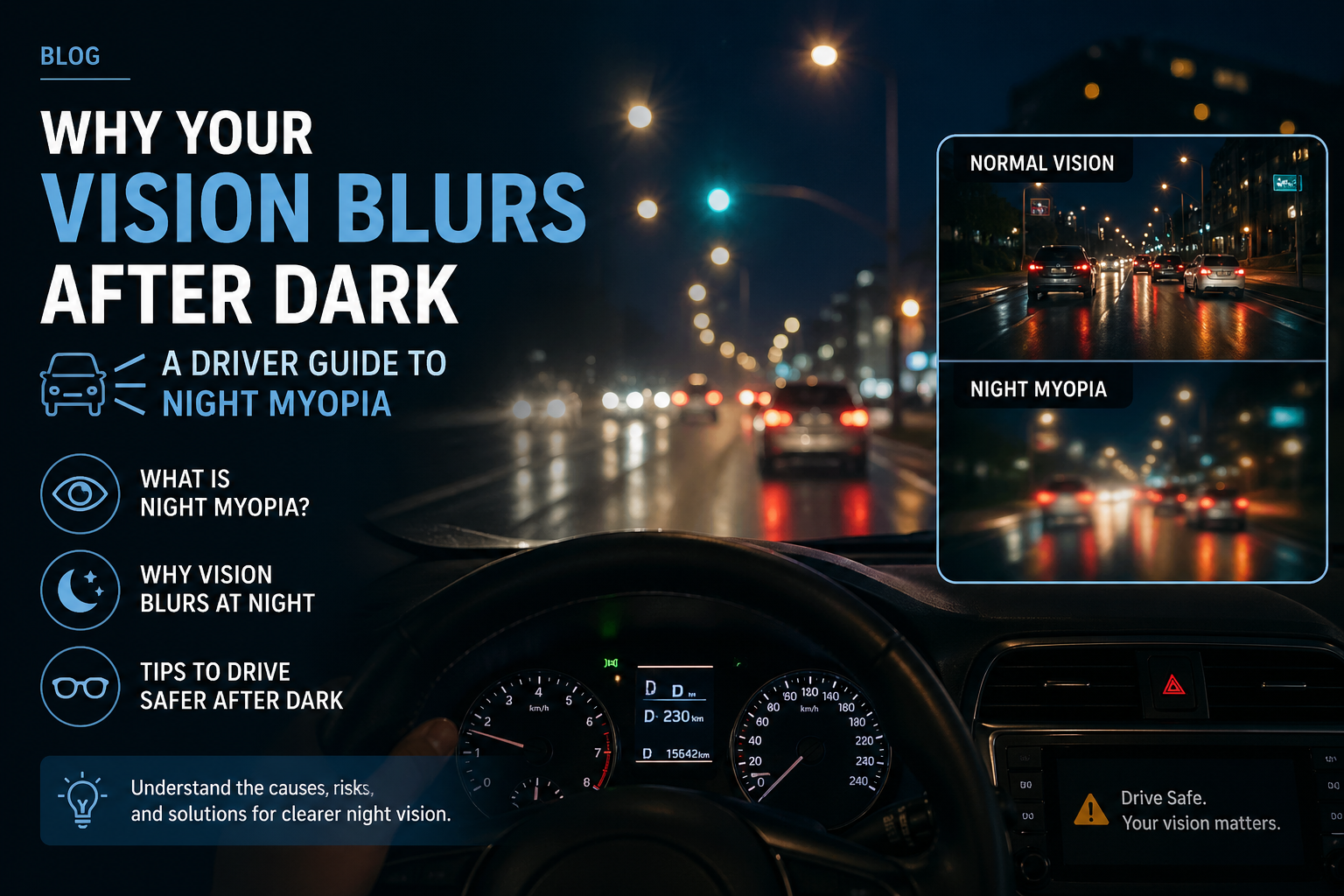
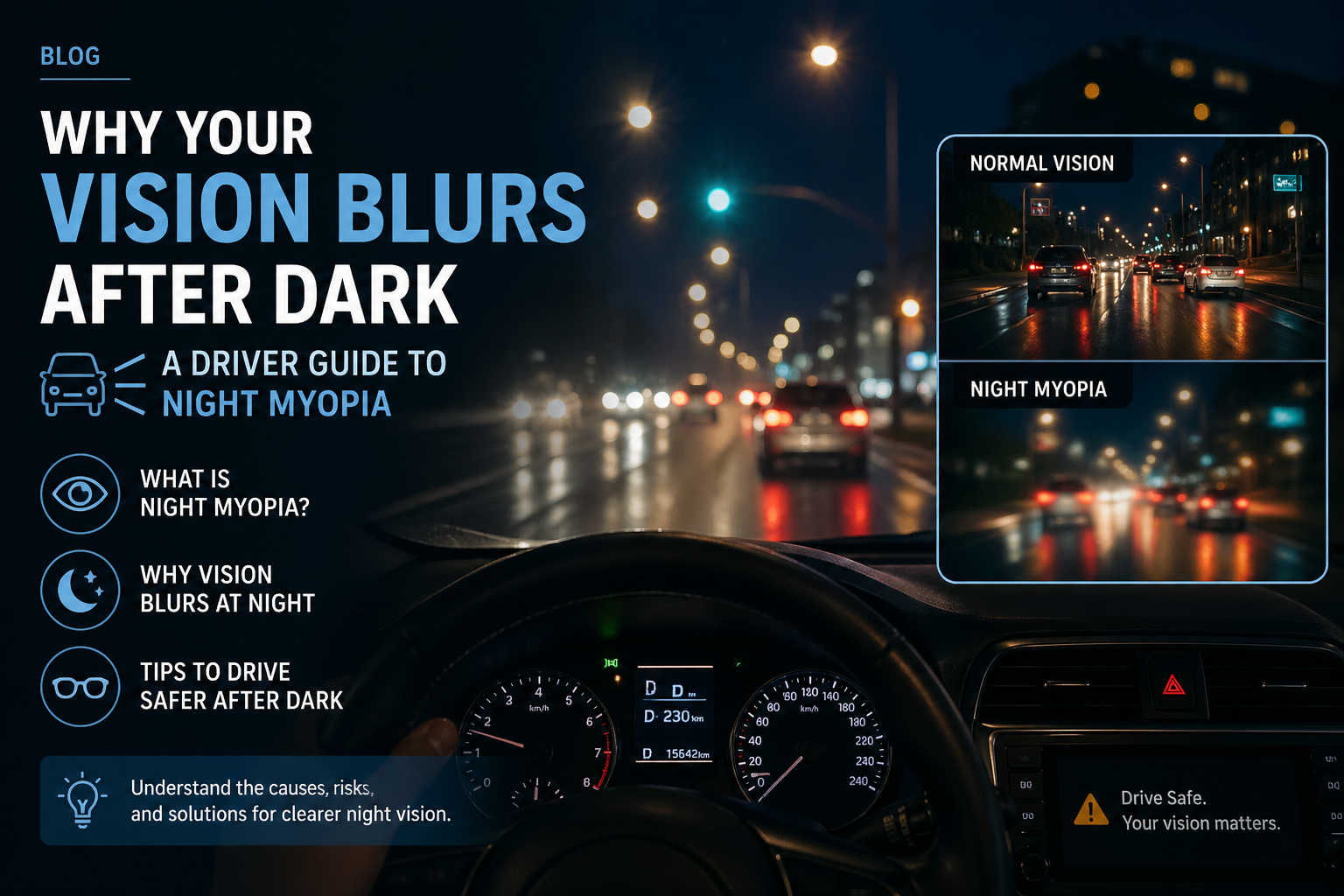
Night myopia, clinically known as nocturnal myopia, is a temporary shift in the eye's ability to focus when light levels fall. Unlike conventional myopia (nearsightedness), which is a structural condition of the eyeball, night myopia is a functional response to low-light environments. In darkness, the pupils dilate widely to gather as much light as possible. This dilation increases what optometrists call spherical aberration — the blurring of light rays that pass through the outer edges of the lens — making distant objects appear soft, doubled, or surrounded by halos.
At the same time, the eye's lens tends to over-accommodate in dim conditions, subtly shifting its focus point forward. The result: objects that should appear sharp at distance are rendered slightly out of focus — even in people whose daytime vision tests as 20/20.
Why It Matters on the Road?
The practical consequences of night myopia on the road are significant. Reduced contrast sensitivity makes it harder to distinguish a dark-clothed pedestrian from a shadowy background. Halo and glare effects around streetlights and oncoming headlights can momentarily blind a driver or distort lane markings. Reduced depth perception at speed compound’s reaction times, shrinking the margin for error on fast or winding roads.
Road safety researchers estimate that the fatal accident rate per kilometre driven is significantly higher at night than during the day — and while fatigue and impaired driving are primary factors, compromised night vision plays a meaningful, often underestimated, supporting role.
Who Is Most at Risk?
Night myopia affects nearly everyone to some degree, but certain individuals experience it more intensely. Young adults in their twenties — whose eyes still have a strong accommodative reflex — are paradoxically among the most susceptible, as the lens over-focuses aggressively in the dark. Older drivers face a different challenge: ageing lenses that transmit less light overall, combined with slower pupil response, make every nighttime journey more visually demanding. People with mild uncorrected myopia or astigmatism will find these existing imperfections amplified dramatically once ambient light disappears.
Correction and Treatment
The good news is that night myopia is both detectable and manageable. Many optometrists now offer low-light refraction tests that measure your vision under simulated night conditions, rather than relying solely on the traditional bright-room chart. If a prescription is indicated specifically for night driving, a separate pair of anti-reflective glasses can be prescribed. For contact lens wearers, certain lens designs reduce spherical aberration and can improve contrast sensitivity considerably in low light.
There is no permanent cure for the underlying optical physics, but awareness, regular eye checks, and the right corrective eyewear can make an enormous difference. Before your next evening journey, it is worth asking yourself a simple question: when did you last test your vision in the dark?


 Buy Gift Card
 Review


