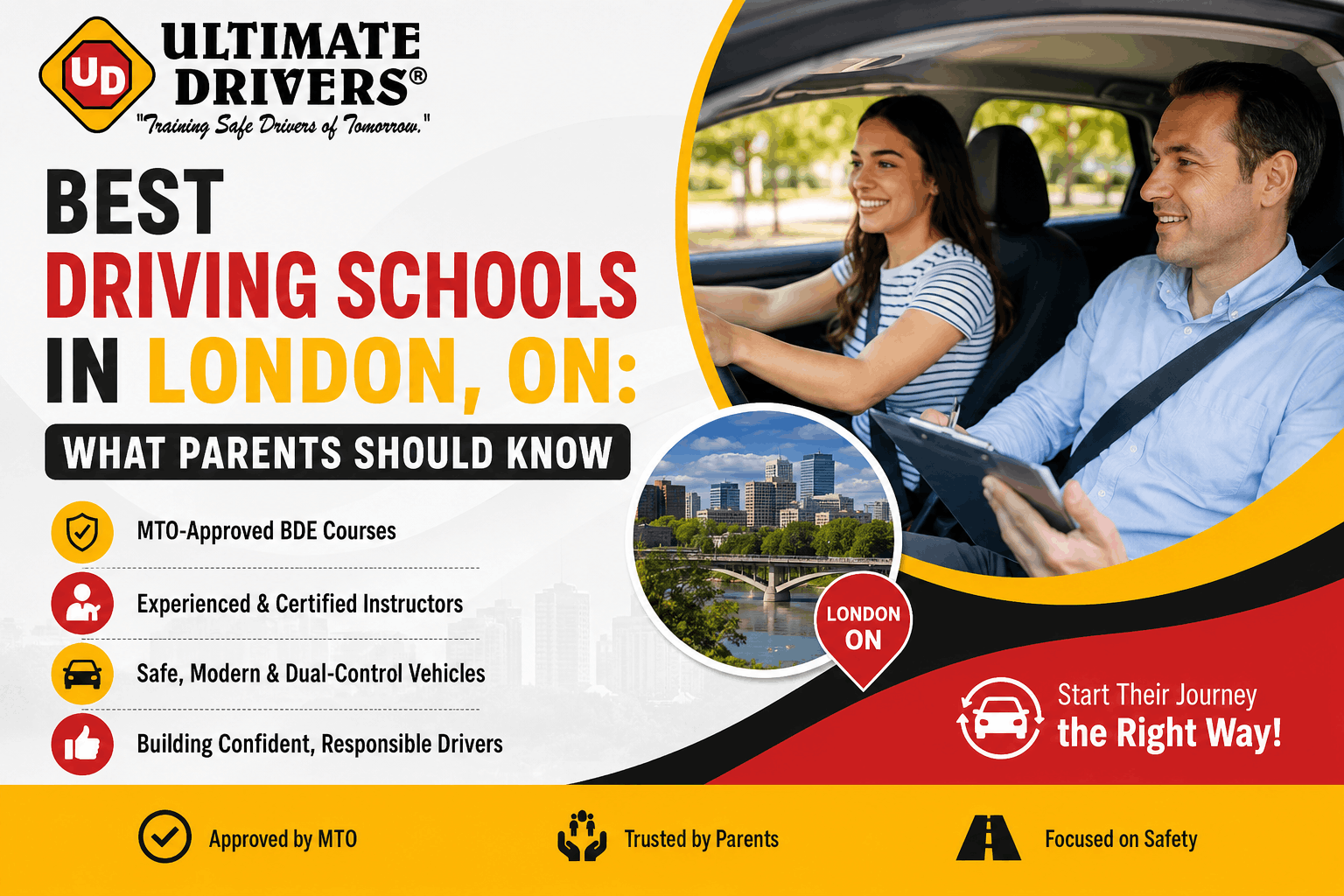
When your teenager starts talking about getting their driver's licence, it's natural to feel a mix of pride and nerves. You want them to be independent, but more than anything, you want them to be safe. Choosing the right
driving school in London, ON is one of the most important steps in that journey — and as a parent, knowing what to look for can make all the difference.
Why the Right Driving School Matters
Not all driving schools are created equal. A quality program doesn't just teach your teen how to pass the G1 exit or G road test — it builds the habits, awareness, and confidence they'll carry for a lifetime of driving. In a city like London, where roads range from quiet suburban streets to busy arterials like Wellington Road and Commissioners Road, new drivers need thorough, real-world preparation.
What to Look for in a London Driving School
1. MTO-Approved Certification
Always start by confirming that the school is approved by the Ministry of Transportation of Ontario (MTO). Enrolling in an
MTO-approved Beginner Driver Education (BDE) program allows your teen to skip the 12-month waiting period between G1 and G2, reducing it to just 8 months. That alone is a significant advantage worth considering.
2. Qualified and Patient Instructors
Ask about instructor credentials and experience. The best driving schools employ certified instructors who know how to work with nervous or first-time drivers. A calm, encouraging teaching style isn't just nice to have — it directly impacts how well young drivers absorb lessons under pressure.
3. Modern, Well-Maintained Vehicles
Your teen will be learning in the school's vehicle, so it matters. Dual-brake systems, good visibility, and a clean, well-maintained car all contribute to a safer and more focused learning environment.
4. Flexible Scheduling
Teenagers have busy lives — school, sports, part-time jobs. Look for a driving school that offers evening and weekend lesson availability so fitting in lessons doesn't become a logistical headache for the whole family.
5. Transparent Pricing and Packages
A reputable school will be upfront about costs. Look for clearly structured packages that include both in-car lessons and theory components. Hidden fees or vague pricing are red flags worth noting.
Questions Parents Should Ask Before Enrolling
Before committing to any driving school, don't hesitate to ask:
• How many in-car hours are included in the package?
• Does the program meet the full MTO BDE curriculum requirements?
• What is the instructor-to-student ratio during lessons?
• Are road test preparation sessions included?
• What happens if a lesson needs to be rescheduled?
Getting clear answers shows you're dealing with a school that operates with professionalism and transparency.
The Ultimate Drivers Difference
At Ultimate Drivers, we understand that parents aren't just enrolling a student — they're trusting us with someone they love. Our programs are designed to meet Ontario's BDE requirements while going beyond the basics to prepare new drivers for real-world conditions, including London's unique mix of urban intersections, highway on-ramps, and residential neighbourhoods.
From structured lesson plans to experienced, supportive instructors, we're committed to giving your teen the foundation they need to drive with confidence and caution.
Give your teen the best possible start.
Contact Ultimate Drivers today to learn more about our driving programs available in London, ON and surrounding areas.


 Buy Gift Card
 Review


